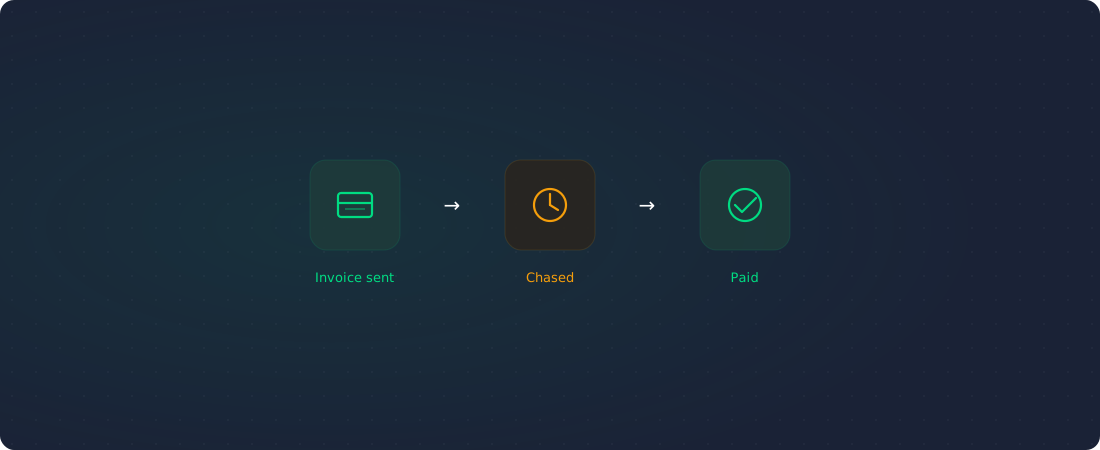
The simple answer.
Credit control is the process of making sure you get paid for the work you have already done.
That is it. Strip away the jargon and that is what it comes down to. You did the work. You sent the invoice. Credit control is everything that happens between sending that invoice and the money landing in your account.
It includes things like setting clear payment terms before you start work, sending invoices promptly, following up when payments are late, and having a plan for what to do when someone does not pay at all.
If you have ever sent an email that starts with "Just a gentle reminder about invoice #1234..." then congratulations: you have done credit control. You might not have called it that, but that is exactly what it is.
The quick version
Credit control is not a department or a piece of software. It is a process: the consistent, proactive work of making sure the money you have earned actually reaches your bank account.
Why it matters more than you think.
Here is the uncomfortable truth. UK businesses are currently owed over £26 billion in late payments. Around 38 businesses close every day because of cash flow problems caused by invoices that were never paid on time.
That is not a typo. Fifty thousand businesses. Every year.
And the damage goes far beyond the obvious. Late payments are silently degrading businesses across the country. They are stealing time (the average small business owner spends 83 hours a year chasing overdue invoices). They are stealing mental health (76% of small business owners report that late payments have affected their wellbeing). And they are stealing growth (the hire you cannot make, the project you cannot start, the opportunity you have to turn down because your cash is trapped in someone else's account).
Credit control is the thing that stops all of that from happening. Or at the very least, it dramatically reduces it.
Without it, you are hoping your clients pay you. With it, you are making sure they do.
What good credit control actually looks like.
Most guides to credit control will give you a textbook definition that mentions things like "assessing creditworthiness" and "managing accounts receivable." That is technically correct. It is also completely useless if you are running a 15-person business and just want to know how to stop invoices going 60 days overdue.
So here is what good credit control looks like in practice, in plain English.
Before the work starts
Good credit control begins before you even send an invoice. It starts with clear payment terms that are agreed in writing before work begins. This means specifying exactly when you expect to be paid (14 days, 30 days, on completion) and what happens if payment is late.
It also means knowing who is responsible for paying you. Not the person who signed the contract. The person who actually processes invoices at the other end. Getting this right at the start saves weeks of frustration later.
When the invoice goes out
Sending invoices promptly sounds obvious, but it is one of the most common failures in small businesses. Every day you delay sending an invoice is another day added to your payment timeline. If your payment terms are 30 days and you wait a week to invoice, you have just turned a 30-day wait into a 37-day wait. For no reason.
Good credit control means the invoice goes out the moment the work is delivered (or at the agreed milestone). It is accurate, clearly laid out, and sent to the right person.
After the invoice goes out
This is where most businesses fall apart. The invoice is sent and then... silence. The business owner hopes the client pays on time. Maybe they set up an automated reminder in Xero or QuickBooks that sends a polite email at 7 days overdue. Then another at 14 days. Then nothing happens, because automated emails are easy to ignore.
Good credit control is proactive and consistent. It means having a structured follow-up process: a friendly reminder a few days before the invoice is due, a phone call if it goes overdue, a firmer written follow-up at 14 days, and a clear escalation plan beyond that. It means someone is actively paying attention to your invoices, not just a system firing off emails into the void.
The automation trap
Automated invoice reminders from your accounting software are better than nothing, but they are not credit control. They are passive. A real credit control process involves human persistence: phone calls, direct emails, problem-solving, and the kind of follow-up that automated systems simply cannot do. If your "credit control" is just Xero sending automatic emails, you are leaving money on the table.
When things go wrong
Good credit control also means having a plan for when things go really wrong. What happens at 30 days overdue? At 60? At 90? Do you know your legal rights? (You have more than you think. Under the Late Payment of Commercial Debts Act 1998, you can charge 8% interest above the Bank of England base rate on overdue invoices, plus a fixed compensation fee).
Having a clear escalation process means you never have to panic or make it up as you go. You know exactly what step comes next, and your client knows you are serious about getting paid.
Who actually does credit control?
In larger businesses, credit control is handled by a dedicated person (a credit controller) or a finance team. They chase invoices, manage payment disputes, monitor which clients are paying late, and keep the whole system running smoothly.
In small and medium-sized businesses? It is usually you. The business owner. Or your office manager. Or your accountant, sort of, sometimes, when they remember.
This is what we call being an accidental credit controller. You did not start your business to chase invoices. You started it to do whatever brilliant thing it is that you do. But somewhere along the way, chasing payments became part of your weekly routine, and now you are spending hours of your time on something that has nothing to do with your actual skills or your actual value.
That is one of the reasons credit control gets neglected. It is no one's primary job, so it becomes everyone's afterthought.
You did not start your business to chase invoices. You started it because you are brilliant at something. Credit control should not be stealing time from that.
The mistakes most businesses make.
After working with businesses on their credit control, we see the same patterns again and again. Here are the most common ones:
- Waiting too long to follow up. The longer you leave an overdue invoice, the harder it becomes to recover. A polite nudge at 3 days overdue is infinitely more effective than an angry email at 60. (Not sure what to say? Here are payment reminder emails that actually get a response).
- Being inconsistent. Chasing one invoice but not another. Following up one week, then forgetting for three weeks. Inconsistency trains your clients to think payment is optional. (These 10 credit control tips will help you build a rhythm).
- Relying entirely on automated reminders. Automated emails from Xero, QuickBooks, or Sage are passive. They are ignored more often than they work. Human follow-up is what actually gets invoices paid.
- Not setting clear terms upfront. If your payment terms are buried in small print or never formally agreed, you have given your client a built-in excuse for paying late.
- Avoiding the conversation. This is the big one. Many business owners feel uncomfortable talking about money, especially with clients they have a good relationship with. So they avoid it. And the invoice sits there, getting older and harder to recover. (There is a way to chase an invoice without damaging the relationship. It is a skill, not a personality trait).
That last one is worth sitting with for a moment. If talking about money with your clients makes you uncomfortable, you are not alone. But that discomfort is costing you real money. Knowing what to say and when to say it makes all the difference.
Doing it yourself vs getting help.
Credit control is not complicated. The principles are straightforward. But it is relentless. It requires consistency, persistence, and time. Every single week, without fail.
For some businesses, handling credit control internally makes perfect sense. If you have a small number of clients, relatively few invoices, and the time to stay on top of them, doing it yourself (or delegating it to someone on your team) can work well.
But for businesses with a larger volume of invoices, or business owners who are already stretched thin, the sums start to change. The 83 hours a year spent chasing payments is 83 hours not spent on winning new clients, delivering projects, or growing the business.
That is where outsourced credit control comes in. An outsourced service takes the entire process off your plate: the chasing, the follow-ups, the difficult conversations, the reporting. Everything goes out under your brand (your clients never know an external team is involved), and you get your time back. (Here is exactly what an outsourced credit control service does, if you want the full picture).
Not sure if outsourcing is right for you?
We have put together a decision checklist to help you figure out whether outsourcing makes sense for your business right now. No sales pitch. Just an honest set of questions.
How to get started with credit control today.
Whether you decide to handle it yourself or bring in help, here are the fundamentals that every UK business should have in place:
- Set clear payment terms. Agree them in writing with every client before work starts. Put them on every invoice. Make sure you know who processes invoices at the other end.
- Invoice immediately. The moment work is delivered, the invoice goes out. No waiting until the end of the month. No batching. No delays.
- Follow up before the due date. A polite reminder 2 to 3 days before an invoice is due is not pushy. It is professional. It also catches problems early (wrong email address, missing purchase order, dispute about the work).
- Have an escalation plan. Know exactly what happens at 7 days overdue, 14 days, 30 days, and beyond. Write it down. Follow it consistently.
- Pick up the phone. Emails are easy to ignore. Phone calls are not. If an invoice is overdue and your email reminders are not working, call them. Most overdue invoices are resolved with a single conversation.
- Document everything. Every email, every phone call, every promise to pay. If things ever escalate to a formal dispute or legal action, this record is your evidence.
- Know your rights. You can charge statutory interest on late payments. You can claim fixed compensation. You do not need to include these in your original terms for them to apply. They are your legal right.
None of this is complicated. All of it is important. The difference between businesses that get paid on time and businesses that do not almost always comes down to whether they have a consistent process or whether they are winging it. (Want all of this in one printable document? Grab our complete credit control checklist).
The bigger picture.
Credit control is not just about individual invoices. It is about the health of your entire business.
When credit control is working, you can forecast properly. You know when money is coming in. You can plan hires, invest in marketing, take on bigger projects, and make decisions based on reality instead of hope.
When it is not working, everything else suffers. You are constantly refreshing your bank feed. You are lying awake on Sunday nights doing mental arithmetic about whether you can make payroll. You are turning down opportunities because your cash is trapped in overdue invoices.
The late payment problem in the UK is not inevitable. It is not "just part of doing business." It is a crisis that is closing 38 businesses every day and causing measurable harm to the mental health of the people running them. It should not be normal.
Good credit control is how you opt out of that crisis. It is how you take back control of your cash flow, your time, and your headspace.
You worked for that money. It belongs in your account. #talkingmoney
Key takeaways
- Credit control is the process of making sure you get paid for work you have already done.
- It starts before the invoice: clear terms, right contact details, written agreements.
- Automated reminders are not enough. Human persistence is what gets invoices paid.
- Consistency is everything. Sporadic chasing trains clients to think payment is optional.
- UK businesses can charge statutory interest on late payments. It is your legal right.
- If chasing invoices is eating your time, outsourcing credit control is a realistic option.
- Good credit control is not just about getting paid. It is about protecting your cash flow, your growth, and your sanity.